

Luxury Outdoor Kitchens: Elevate Fall Entertaining
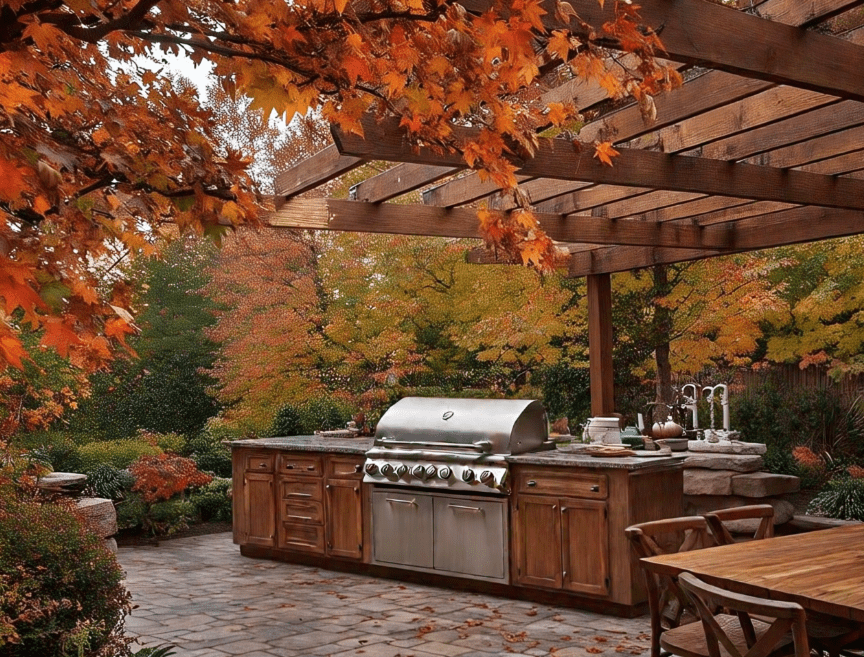
As the crisp autumn air descends, outdoor living spaces transform into cozy retreats. An outdoor kitchen can elevate your fall entertaining experience, providing a versatile and stylish setting for gatherings with friends and family. Let’s explore the key elements of an outdoor kitchen installation and how to design it for optimal fall enjoyment.
What Makes the Perfect Outdoor Kitchen?
A high-quality grill is the centerpiece of any outdoor kitchen and should match your cooking style, whether you prefer a gas grill, charcoal grill, or a combination of both. To enhance versatility, consider adding a side burner or griddle to the outdoor kitchen installation, and a pizza oven can be a fun and functional option as well.
Ample storage space is essential for keeping your kitchen organized, so think about including cabinets, drawers, and shelves to store cooking utensils, spices, and other essentials. You’ll also want a durable and weather-resistant countertop made from materials like granite, quartz, or stainless steel, which provides a practical workspace for food preparation.
A sink with running water is a convenient addition for easy cleanup and food prep. Including a small outdoor refrigerator will help keep drinks and food cold. Proper lighting is important for creating a warm and inviting atmosphere, so consider using recessed lighting, pendant lights, or string lights.
Lastly, for cooler evenings, a fireplace or patio heater can extend your outdoor entertaining season, making your kitchen a comfortable space year-round.
6 Design Tips for Entertaining
- Cozy Seating: Create a comfortable seating area with cozy furniture, such as sofas, chairs, and ottomans.
- Fire Pit: A fire pit is a perfect addition to an outdoor kitchen. It provides warmth, ambiance, and a place to roast marshmallows.
- Fall Decor: Decorate your outdoor kitchen with autumnal elements like pumpkins, gourds, and fall foliage.
- Outdoor Bar: A well-stocked outdoor bar can elevate your entertaining experience.
- Music: Create a festive atmosphere with outdoor speakers or a portable sound system.
- Lighting: Soft, warm lighting can create a magical ambiance. Consider string lights, lanterns, or outdoor sconces.
Fall Entertaining Ideas
- Harvest Dinner: Host a dinner party featuring seasonal ingredients like pumpkins, apples, and cranberries.
- Bonfire Night: Gather around the fire pit for a cozy evening of storytelling and s’mores.
- Tailgating Party: Watch your favorite team’s game outdoors with friends and family.
- Outdoor Movie Night: Set up an outdoor movie screen and enjoy a cozy night under the stars.
By incorporating these design elements and entertaining ideas, you can create an unforgettable outdoor experience that will make your fall gatherings even more special. Remember, the key to a successful outdoor kitchen is creating a space that reflects your style and enhances your outdoor living experience.
4 Tips for Fall Entertaining:
- Protect Your Furniture: Invest in outdoor furniture covers to protect your furniture from the elements.
- Clean Your Grill: Clean your grill thoroughly before and after each use to ensure optimal performance.
- Prepare for Unexpected Weather: Have a plan for inclement weather, such as a covered patio or indoor backup plan.
- Safety First: Always practice fire safety and be aware of potential hazards like carbon monoxide poisoning.
Most importantly, take a moment to relax and savor the beauty of the fall season. Spend quality time with your loved ones, whether it’s going for a scenic walk through colorful leaves or enjoying a cozy evening by the fire. Embrace the warmth of togetherness and create lasting memories during this enchanting time of year.
Posted in:
Tags: